
The Resurrection Passes the Tests of History
To listen to this message, click here...
John 20:1–10 brings us to a moment that literally shifts the course of human history. It begins in the early hours of the morning, while it’s still dark. Mary Magdalene goes to the tomb, struggling with grief, confusion, and a heavy heart. Just days earlier, she had watched Jesus die. The one she trusted, the one she believed was the Messiah, had been crucified. And now, as she approaches the tomb, she notices something unexpected. The stone has been taken away.
Her first instinct isn’t hope. It’s concern. She runs to Simon Peter and the other disciple (John) and says, “They have taken the Lord out of the tomb, and we do not know where they have laid him” (John 20:2). That reaction feels familiar, doesn’t it? When life doesn’t make sense, we often assume the worst. We interpret confusion through the lens of loss instead of possibility.
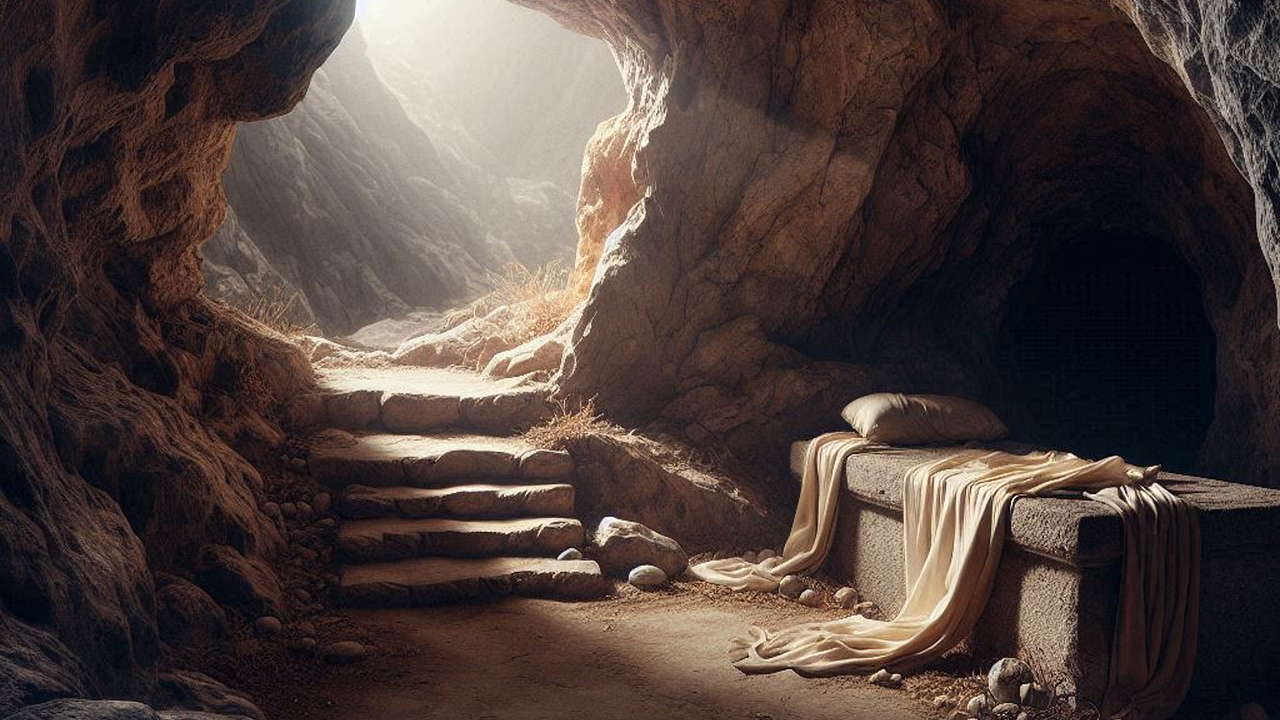
Peter and John immediately run toward the tomb. You can almost feel the urgency in their action. John outruns Peter and arrives first, but he hesitates. He looks in and sees the linen cloths lying there. Then Peter arrives, and true to his personality, he goes straight in. He sees the linen cloths and the face cloth, folded and set aside. Everything is orderly. Nothing suggests theft or chaos. Something else has happened here.
Then John enters. And the text tells us something powerful: “He saw and believed” (John 20:8).
At that moment, something begins to click into place. He didn’t have a full understanding of everything he was witnessing, but John had seen enough to spark genuine belief. Verse 9 reminds us that they did not yet understand the Scripture, that He must rise from the dead. Their understanding is still developing. We’re watching their faith grow in real time.
And that’s where a passage like this feels highly relatable.
Many of us live somewhere between seeing and fully understanding. We’ve encountered enough of Jesus to know that He’s not like anyone else. We’ve seen glimpses of His work in our lives. Maybe we’ve even sensed His presence, His grace, His truth. But maybe we still have a few questions or gaps in our understanding. It’s possible there are still moments where we’re trying to piece it all together.
This passage gives us permission to be in that space, at least for a little while (although I hope we don’t stay there too long).
Notice what John does. He doesn’t have every answer. He doesn’t yet grasp the full theological significance of the resurrection. But he sees what’s in front of him, and he believes. His faith begins with what he can observe, even before he fully understands.
There’s value in that for us, especially as we begin to think about the historical reality of the resurrection.
Christian faith isn’t a blind leap into the dark. It’s rooted in real events, real places, and real eyewitness testimony. The empty tomb wasn’t a metaphor. It was a physical reality that people encountered. They saw it. They examined it. They wrestled with what it meant.
Peter saw the linen cloths.
John saw and believed.
Mary saw the empty tomb and went searching for answers.
And over time, all of them would come to understand that Jesus had truly risen from the dead, just as He said He would.
But before we move into the evidence, it’s worth pausing here and asking a personal question.
What have you seen?
Not just intellectually, but personally. Where have you seen God at work in your life? Where have you seen His faithfulness, His provision, His grace? Where have you sensed that He is real and present, even if you couldn’t fully explain it?
Because often, faith begins right there.
It begins with honest observation.
It grows through thoughtful reflection.
And it deepens as understanding catches up over time.
There’s also something else worth noticing in this passage. The tomb is empty, but the story isn’t chaotic. The linen cloths are lying there. The face cloth is folded. This isn’t the scene of a rushed theft. This is intentional, calm, and purposeful.
Jesus didn’t escape death in a panic. He conquered it with authority.
So think about what that means for us.
It means death isn’t the end.
It means sin doesn’t have the final word.
It means hope isn’t wishful thinking. It’s grounded in reality.
And it also means that the same power that raised Jesus from the dead isn’t distant or abstract. It’s active. It’s present. It’s available to us.
In just a moment, we’re going to walk through the historical evidence for the resurrection, and we aren’t just exploring an idea. We’re examining the foundation of our faith. Christianity stands or falls on this moment. If the tomb is empty because Jesus truly rose, then everything He said is true. Every promise holds and every claim He made is miraculously shown to be true.
But before we analyze, before we evaluate, before we build the case, we start where John started.
We look, we consider, and we allow what we see to move us toward belief.
So as you listen, as you engage, as you think through the evidence, don’t approach this only as a skeptic or a student. Approach it as someone who is open to what God may be revealing.
Because the empty tomb isn’t just something to study.
It’s something that invites a response.
John saw and believed.
And the same invitation is extended to us.
© John Stange, 2026