
The War in Heaven and Satan’s Defeat
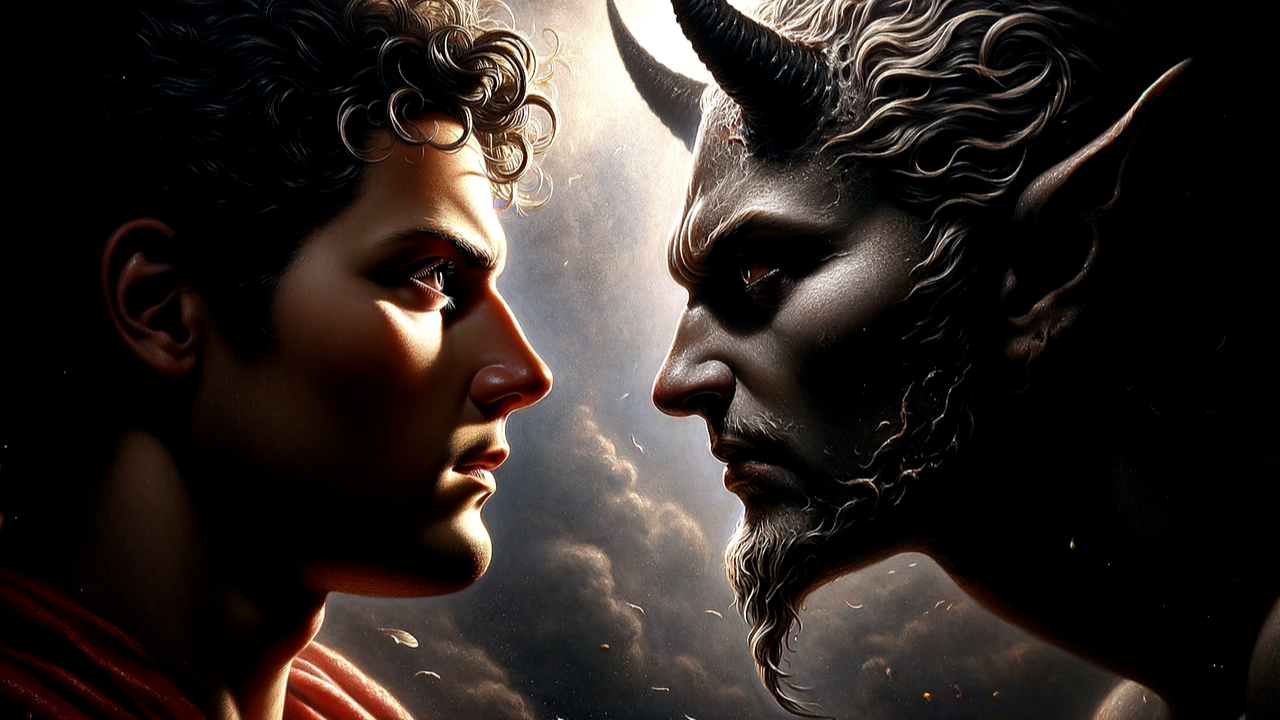
Revelation 12:1–6 introduces one of the most vivid and symbolic scenes in the entire book of Revelation. John writes,
“And a great sign appeared in heaven: a woman clothed with the sun, with the moon under her feet, and on her head a crown of twelve stars.” (Revelation 12:1)
From the very beginning, John tells us this is a sign. That word signals that what we’re reading is symbolic imagery that points to real people and real events in God’s redemptive plan. The symbolism may feel mysterious at first, but when we read it in light of the rest of Scripture, especially the Old Testament, the meaning becomes clearer.
This passage ultimately centers on Jesus. It reminds us that from the moment He entered this world, Satan tried to destroy Him. Yet every attempt failed because God's plan of redemption cannot be stopped.
Let’s walk through this scene and see what it reveals about Christ and the victory He has secured for us.
The Woman Clothed With the Sun
John writes:
“And a great sign appeared in heaven: a woman clothed with the sun, with the moon under her feet, and on her head a crown of twelve stars.” (Revelation 12:1)
Who is this woman?
Some interpreters have suggested she represents Mary, the mother of Jesus. Others have suggested she represents the church. But when we look carefully at the imagery and the Old Testament background, the most consistent interpretation is that the woman represents Israel.
The imagery echoes a dream recorded in Genesis. In Genesis 37:9–10, Joseph described a vision where the sun, moon, and eleven stars bowed down to him. His father Jacob immediately recognized the symbolism.
“Shall I and your mother and your brothers indeed come to bow ourselves to the ground before you?” (Genesis 37:10)
In Joseph’s dream, the sun represented Jacob, the moon represented Rachel, and the stars represented the twelve tribes of Israel. Revelation 12 clearly draws from this imagery. The woman crowned with twelve stars represents the nation of Israel through whom the Messiah would come.
Throughout the Old Testament, Israel is often pictured as a woman or as a mother bringing forth God's purposes in the world. For example, Isaiah 54:5–6 describes Israel as a woman whom the Lord calls His own, and Micah 4:10 speaks of Zion experiencing labor pains.
John continues:
“She was pregnant and was crying out in birth pains and the agony of giving birth.” (Revelation 12:2)
This image captures the long history of Israel waiting for the promised Messiah. For centuries, the people of Israel carried the hope that one day God would send a Savior.
That promise began all the way back in Genesis 3:15, when God told the serpent,
“I will put enmity between you and the woman, and between your offspring and her offspring; he shall bruise your head, and you shall bruise his heel.”
From that moment forward, history moved toward the arrival of the One who would crush Satan.
Israel endured slavery, exile, persecution, and countless hardships. Yet through it all, God preserved the nation because the Messiah would come through them. The “labor pains” John describes represent centuries of expectation and suffering leading to the birth of Christ.
And this reminds us of something important about God’s faithfulness.
God always keeps His promises. Even when centuries pass. Even when circumstances seem impossible. Even when evil seems to be winning.
The Great Red Dragon
John then introduces a terrifying figure.
“And another sign appeared in heaven: behold, a great red dragon, with seven heads and ten horns, and on his heads seven diadems.” (Revelation 12:3)
This dragon represents Satan himself, which Revelation explicitly confirms later in the chapter (Revelation 12:9).
The imagery reflects the destructive power and influence Satan exercises in the world. The seven heads and ten horns point to his influence over earthly kingdoms and political systems. Throughout history, Satan has worked through rulers and empires to oppose God's purposes.
John continues:
“His tail swept down a third of the stars of heaven and cast them to the earth.” (Revelation 12:4)
Many interpreters understand this as a reference to Satan’s rebellion before human history began. When Satan fell, he led a large number of angels into rebellion against God. These fallen angels became what we know as demons.
But what comes next is even more chilling.
“And the dragon stood before the woman who was about to give birth, so that when she bore her child he might devour it.” (Revelation 12:4)
This is Satan’s strategy throughout Scripture. From the very beginning, he has tried to stop the arrival of the Messiah.
Think about the many moments in biblical history when the messianic line seemed like it might be destroyed.
Pharaoh ordered the killing of Hebrew baby boys in Exodus 1:22.
Queen Athaliah attempted to destroy the royal line of David in 2 Kings 11:1.
Later, King Herod ordered the massacre of infants in Bethlehem in Matthew 2:16 after hearing about the birth of Jesus.
Again and again, Satan attempted to eliminate the promised Savior before He could accomplish His mission.
But every attempt failed.
Because God was preserving His Son for a purpose.
The Birth of the Male Child
John writes,
“She gave birth to a male child, one who is to rule all the nations with a rod of iron.” (Revelation 12:5)
This child is unmistakably Jesus Christ.
The phrase “rule all the nations with a rod of iron” comes directly from Psalm 2:9, a Messianic prophecy about the reign of God's Anointed King.
Psalm 2 describes a world in rebellion against God, yet it concludes with the Lord installing His chosen King over the nations.
Jesus is that King.
He was born into the world through the nation of Israel. His birth fulfilled centuries of prophecy.
For example, Isaiah 9:6 foretold the coming Messiah:
“For to us a child is born, to us a son is given; and the government shall be upon his shoulder.”
Likewise, Micah 5:2 predicted that the Messiah would be born in Bethlehem.
Every detail unfolded exactly as God promised.
Yet Revelation quickly moves from Christ’s birth to His ultimate triumph.
John writes,
“But her child was caught up to God and to his throne.” (Revelation 12:5)
This brief phrase summarizes the entire earthly ministry of Jesus. He was born, lived a sinless life, died for our sins, rose from the dead, and ascended into heaven where He now reigns at the right hand of the Father.
Satan tried to destroy Him, but instead Jesus conquered sin, death, and hell.
And one day He will return to rule the nations exactly as Psalm 2 foretold.
The Protection of the Woman
After describing the ascension of Christ, John turns his attention back to the woman.
“And the woman fled into the wilderness, where she has a place prepared by God, in which she is to be nourished for 1,260 days.” (Revelation 12:6)
I believe this verse points forward to events during the future Tribulation period.
The 1,260 days equals three and a half years, which corresponds to the final half of the seven-year Tribulation described in Daniel 9:27.
During this time, Satan will intensify his persecution of Israel. But even then, God will protect a remnant of His people.
This protection fulfills many Old Testament promises that God will preserve Israel and ultimately restore them.
For example, Zechariah 12:10 foretells a future moment when the people of Israel will recognize Jesus as their Messiah.
“They will look on me, on him whom they have pierced, and they shall mourn for him.”
Likewise, Romans 11:26 declares,
“And in this way all Israel will be saved.”
God isn't finished with Israel. He continues to preserve them according to His covenant promises.
Even during the darkest days of the Tribulation, God will sustain and protect those who belong to Him.
The Larger Spiritual Battle
Revelation 12 reminds us that behind the events of human history is a spiritual battle.
Satan hates Jesus. And because he hates Jesus, he opposes everything connected to Him.
He attacked the nation of Israel because the Messiah would come through them.
He tried to destroy Jesus during His earthly life.
And today, he continues to oppose the people who belong to Christ.
Peter warned believers about this reality when he wrote,
“Your adversary the devil prowls around like a roaring lion, seeking someone to devour.” (1 Peter 5:8)
But here's the encouraging truth.
Satan is powerful, but he isn't victorious.
Jesus already defeated him at the cross.
In Colossians 2:15, we read that through His death and resurrection, Christ
“disarmed the rulers and authorities and put them to open shame, by triumphing over them.”
Satan's defeat is certain.
And Revelation 12 is part of that larger story of victory.
What This Means for Us
It's easy to read passages like this and think of them only in terms of future prophecy. But there's also a deeply personal encouragement here.
First, this passage reminds us that God is in control of history.
For thousands of years, Satan attempted to derail God's plan of redemption. Yet every attempt failed. God's promises moved forward exactly as He intended.
The same is true in our lives.
Sometimes the circumstances we face feel chaotic or overwhelming. We see suffering, conflict, and uncertainty around us. But God hasn't lost control.
The same God who preserved Israel, sent His Son, and defeated Satan is still guiding history toward its final conclusion.
Second, this passage reminds us that Jesus is the victorious King.
The child born through Israel didn't remain a vulnerable infant. He rose from the grave, ascended into heaven, and now reigns from God's throne.
One day He will return to establish His kingdom on earth.
When we place our trust in Jesus, we align ourselves with the winning side of history.
Third, this passage encourages us to remain faithful even in the middle of spiritual opposition.
Satan couldn't stop Jesus, and he can't ultimately defeat those who belong to Christ.
Yes, believers still experience trials and spiritual battles. But our future is secure because Jesus has already won.
Fixing Our Eyes on Jesus
Revelation 12 is ultimately a reminder that the story of Scripture centers on Jesus.
From the promise in Genesis 3:15 to the birth of Christ in Bethlehem, from the cross to the empty tomb, the Bible tells the story of God's plan to rescue humanity through His Son.
Satan opposed that plan at every step.
But he failed.
Jesus came.
Jesus died.
Jesus rose.
And Jesus reigns.
And one day soon, He will return.
Until that day, we live with confidence in the victory He has already secured.
So when you read passages like Revelation 12, don't just see mysterious imagery. See the larger story unfolding.
See God's faithfulness across centuries.
See Satan's defeated rebellion.
And most importantly, see the victorious King who came to rescue us.
The dragon tried to devour the child.
But the child now sits on the throne.
And because of Jesus, the final victory is already assured.
The War in Heaven and the Victory of Christ
Continuing our look at the rest of this chapter, Revelation 12:7–17 pulls back the curtain on a reality we rarely see but certain feel. It shows us the spiritual battle that’s been taking place behind the scenes of human history. The passage reminds us that the struggle between good and evil isn't just philosophical or cultural. It's spiritual. And at the center of that battle stands Jesus Christ, the One who has already secured the final victory.
John writes,
“Now war arose in heaven, Michael and his angels fighting against the dragon. And the dragon and his angels fought back.” (Revelation 12:7)
This moment takes place during the Tribulation period described throughout Revelation. That’s the seven-year Tribulation that unfolds after the church is removed from the earth. During that time, God will resume His prophetic dealings with Israel and bring the world to the culmination of His redemptive plan.
In the middle of that period, a dramatic event takes place in heaven. Michael the archangel leads the forces of God against Satan and his demons.
Michael isn't a new figure in Scripture. In Daniel 10:13 he appears as a powerful angelic protector of God's people. In Daniel 12:1, he is specifically described as the one who stands watch over Israel. So when this heavenly battle occurs, Michael is once again acting as a defender of God's covenant people.
John continues:
“But he was defeated, and there was no longer any place for them in heaven.” (Revelation 12:8)
Satan has had limited access to heaven throughout history. The book of Job 1:6–12 shows him appearing before God to accuse Job. Likewise, Zechariah 3:1 describes Satan standing before the Lord to accuse the high priest Joshua.
But this passage describes a turning point. During the Tribulation, Satan and his demons will be permanently expelled from heaven.
John explains:
“And the great dragon was thrown down, that ancient serpent, who is called the devil and Satan, the deceiver of the whole world.” (Revelation 12:9)
Notice the titles used here. He's called the dragon, emphasizing his destructive nature. He's called the ancient serpent, connecting him to the deception in Genesis 3. He's called the devil, meaning slanderer. And he's called Satan, which means adversary.
Every one of those names reveals something about his character. He deceives. He accuses. He opposes. He destroys.
But despite his activity, his defeat is certain.
John then hears a loud proclamation in heaven:
“Now the salvation and the power and the kingdom of our God and the authority of his Christ have come.” (Revelation 12:10)
Why is heaven celebrating?
Because Satan, the great accuser, has been thrown down.
The verse continues,
“For the accuser of our brothers has been thrown down, who accuses them day and night before our God.”
For centuries Satan has attempted to condemn God's people by pointing to their sin. And if we're honest, he doesn't have to look very hard. Every believer knows what it's like to wrestle with guilt and failure.
But here's the good news of the gospel.
Jesus has already answered every accusation.
Romans 8:33–34 says,
“Who shall bring any charge against God's elect? It is God who justifies. Who is to condemn? Christ Jesus is the one who died.”
Satan accuses.
Jesus defends.
And because Jesus gave His life for us, those accusations no longer have power.
That’s why heaven celebrates.
John continues with a powerful description of how believers overcome the enemy:
“And they have conquered him by the blood of the Lamb and by the word of their testimony.” (Revelation 12:11)
Victory doesn't come through human strength. It comes through the blood of the Lamb, the sacrifice of Jesus Christ on the cross.
When Jesus died, He paid the penalty for our sin completely. Nothing remains unpaid. Nothing remains unresolved. His sacrifice secured our redemption.
Because of that, believers can stand firm in their testimony about Christ.
The verse ends with a challenging statement:
“For they loved not their lives even unto death.”
During the Tribulation, many believers will face intense persecution. Their faith in Christ will cost them their lives. Yet they will remain faithful because they know that Jesus is worth more than anything this world offers.
This kind of faith reminds us that our hope isn't anchored in comfort or safety. Our hope is anchored in Christ.
But Satan's defeat in heaven leads to something troubling on earth.
John writes,
“But woe to you, O earth and sea, for the devil has come down to you in great wrath, because he knows that his time is short!” (Revelation 12:12)
Satan understands something many people forget.
His time is limited.
He knows that Jesus will ultimately destroy him, so during the Tribulation he will intensify his efforts to oppose God and persecute God's people.
John then describes his focus on Israel:
“And when the dragon saw that he had been thrown down to the earth, he pursued the woman who had given birth to the male child.” (Revelation 12:13)
Earlier in the chapter, the woman represented Israel, the nation through whom the Messiah came. During the Tribulation Satan will target Israel with intense hostility.
Yet God will protect a remnant.
John says,
“But the woman was given the two wings of the great eagle so that she might fly from the serpent into the wilderness.” (Revelation 12:14)
This imagery echoes Exodus 19:4, where God told Israel He carried them on eagle's wings out of Egypt. Just as God protected Israel in the past, He will again preserve His people during the Tribulation.
Even Satan's attempts to destroy them will fail.
Finally, the dragon turns his anger toward others:
“Then the dragon became furious with the woman and went off to make war on the rest of her offspring, on those who keep the commandments of God and hold to the testimony of Jesus.” (Revelation 12:17)
Satan's hatred ultimately targets anyone who belongs to Jesus.
That reality hasn't changed. Even today believers experience spiritual opposition, temptation, and pressure to abandon their faith.
But Revelation 12 reminds us of something incredibly encouraging.
The outcome of this battle is already determined.
Jesus has already won.
At the cross, He defeated sin. At the resurrection, He defeated death. And one day, when He returns, He will completely defeat Satan and establish His kingdom on earth.
So when we face spiritual battles in our own lives, we don't fight for victory. We fight from victory.
Our confidence isn't in our strength. It's in Christ.
He shed His blood for us.
He defends us against every accusation.
And He will one day bring this conflict to its final end.
Until that day, we keep holding onto the testimony of Jesus.
Because the Lamb who was slain is also the King who reigns.
© John Stange, 2026