
The Victory of the Lamb and the Coming Harvest
The other day, I was teaching a public speaking class to a fun group of college freshmen, and during the class, we were discussing what makes an effective political speech. We spoke about several key aspects, including the credibility of the speaker. At that point, I shared a portion of a speech that was given over a century ago by Theodore Roosevelt. It was a recreation because the original wasn’t recorded.
After I played it for them, I admitted that part of my motivation for selecting the clip was that I have always found him to be an interesting topic of study. He was the type of guy who wasn’t content to do just one thing. He also took calculated, but big risks, and he was willing to risk failure and criticism if his ideas didn’t work out. I find that inspiring, and in my own way, I have tried to follow that example.
But there’s an example worth following who supersedes anyone on this earth we may take inspiration from, and Revelation 14 illustrates the value of following Him. Jesus Christ, the Lord over all creation, is referred to in this chapter as the One those who were devoted to Him were following. While the rest of the world appears ready to settle for false sources of salvation and hope, Jesus is worthy of our devotion because He alone offers the life and redemption we truly need.
Generally speaking, I think we might also say that Revelation 14 feels like a breath of fresh air after the intensity of chapter 13. In that chapter, the beast rises, deception spreads, and the pressure to compromise grows heavy. Then suddenly, the scene shifts. John looks again, and what he sees is a picture of clarity, victory, and Jesus reigning.
“Then I looked, and behold, on Mount Zion stood the Lamb, and with him 144,000 who had his name and his Father’s name written on their foreheads” (Revelation 14:1).
I appreciate the fact that the Lamb is standing, not struggling or uncertain. That detail should stand out to us because it tells us everything about how this story ends.
The Lamb and His Redeemed
Mount Zion, which John mentions in this passage, is more than just a mountainous location. In the Old Testament, it’s the place of God’s rule and presence. Psalm 2:6 says, “As for me, I have set my King on Zion, my holy hill.” Isaiah 24:23 speaks of the Lord reigning on Mount Zion in glory. So when John sees the Lamb there, he’s seeing fulfillment. Jesus isn't just the suffering Lamb of the cross. He’s the reigning King.
And with Him are the 144,000 people, sealed and secure. Earlier in Revelation 7, we learned these are servants of God who are set apart during the Tribulation. From the perspective on prophesy that I lean toward, I believe these are most likely Jewish believers who are preserved by God during that time of global turmoil.
We’re told that they bear His name, and that's a significant detail. In Revelation 13, the world is pressured to receive the mark of the beast. But here, these believers are marked by God Himself. They belong to Him, and their identity is secure.
The idea of bearing a name is really a special thing. A few weeks back, one of my sons got married, and now our new daughter-in-law shares our last name. A few weeks from now, our other son is getting married and we’ll add another Stange to the list. A couple of weeks after that, our daughter is getting married, which means we’ll have to subtract one Stange from the overall total, BUT we’re still up one on the overall count.
All kidding aside, take a moment to think about the concept of “naming” from a spiritual perspective. If you’ve trusted in Christ, you bear His name. You don’t need to chase the world’s approval or fear its rejection. Your identity isn’t defined by culture, success, failure, or even by the earthly family you’re part of. It’s defined by your relationship with Jesus.
A New Song and a Set-Apart Life
In Revelation 14:2, John hears a voice like many waters and loud thunder, yet also like harpists playing. So it’s powerful and beautiful at the same time. The 144,000 are singing a new song before the throne, a song only they can learn.
Their lives are described in interesting terms. They’ve kept themselves from spiritual defilement, they follow the Lamb wherever He goes, and “in their mouth no lie was found, for they are blameless” (Revelation 14:5).
By the way, this passage isn’t teaching sinless perfection before glorification. It’s describing a life marked by devotion, integrity, and allegiance to Christ. These are people who didn’t compromise with the world system of the beast. They stayed faithful to Jesus in the midst of great pressure to do the opposite.
That’s certainly a challenge for us as well. We aren't in the Tribulation, but we are surrounded by pressures to compromise. Following Jesus can feel costly.
But this passage reminds us that faithfulness is something that continues to matter to God. He sees it. He honors it. And one day, it will be publicly vindicated.
The Everlasting Gospel Proclaimed
Next, John sees an angel flying directly overhead, proclaiming “an eternal gospel to those who dwell on earth” (Revelation 14:6). The message is simple and urgent: “Fear God and give him glory… and worship him who made heaven and earth” (v. 7).
Even in the darkest period of human history, God is still extending mercy. He’s still calling people to turn to Him. That reflects His heart, revealed throughout Scripture. Ezekiel 33:11 says that God takes no pleasure in the death of the wicked, but desires that they turn and live.
This also reminds us of the Creator language of Genesis 1. The call is to worship the true God, not the counterfeit system of the beast. The world will be full of deception, but God makes the truth unmistakably clear.
There’s something deeply encouraging about that. God doesn’t leave people without a witness. He’s always calling, always inviting, always making a way for repentance.
And that same gospel call is still going out today. Fear God. Give Him glory. Worship Him. That isn't just a future message. It’s a present invitation.
The Fall of Babylon
Another angel follows, announcing, “Fallen, fallen is Babylon the great” (Revelation 14:8).
Babylon represents the world’s system in rebellion against God. That concept is rooted in Genesis 11, where humanity sought to build a tower to heaven, making a name for themselves apart from God. That spirit of pride and independence has continued throughout history.
In Revelation, Babylon becomes a symbol of a global system of economic, political, and religious opposition to God. It looks powerful and feels unstoppable. But here, its fall is declared as certain.
Isaiah 21:9 uses similar language: “Fallen, fallen is Babylon.” God had judged it before, and He will do it again.
This is a reminder not to put our hope in the systems of this world. They rise and fall. They promise security but can’t deliver lasting peace.
Please remember that when you watch leaders rise and fall and you observe everything that takes place on a global scale during our generation.
If your confidence is tied to earthly structures, it’s going to be shaken. But if your hope is in Christ, it’s secure. His kingdom isn’t temporary. It’s eternal.
A Warning About Judgment
The tone shifts again as a third angel delivers a warning. Those who worship the beast and receive his mark will drink the wine of God’s wrath, poured full strength.
This is one of the most serious warnings in all of Scripture. It isn't symbolic in the sense of being softened. It’s intense because the reality is intense. God is holy, and sin has consequences.
Isaiah 51:17 speaks of the cup of God’s wrath. Jeremiah 25 describes nations drinking from that cup. Here in Revelation, the warning becomes personal and final.
And yet, even this warning is an act of mercy. It’s a clear declaration of what’s at stake. God isn’t hiding the truth. He’s making it known so people can respond.
For believers, this section also includes a call to endurance. “Here is a call for the endurance of the saints” (Revelation 14:12). Following Jesus won’t always be easy. But it’s worth it.
Then comes a beautiful promise: And I heard a voice from heaven saying, “Write this: Blessed are the dead who die in the Lord from now on.” “Blessed indeed,” says the Spirit, “that they may rest from their labors, for their deeds follow them!” (v. 13) Their works follow them. Their labor isn’t wasted. Their faithfulness is remembered.
If you’ve ever wondered whether your obedience matters to God, this answers that question. It does. Every act of faithfulness, every quiet step of obedience, every moment of trust, it all matters to Him.
Our labors don’t earn us God’s love or favor, but He does honor and acknowledge them. That means every secret act of kindness or anonymous moment of generosity is something the Lord holds close to His heart and something He plans to acknowledge in Heaven. He delights in it because it’s an example of His children emulating His character.
The Harvest of the Earth
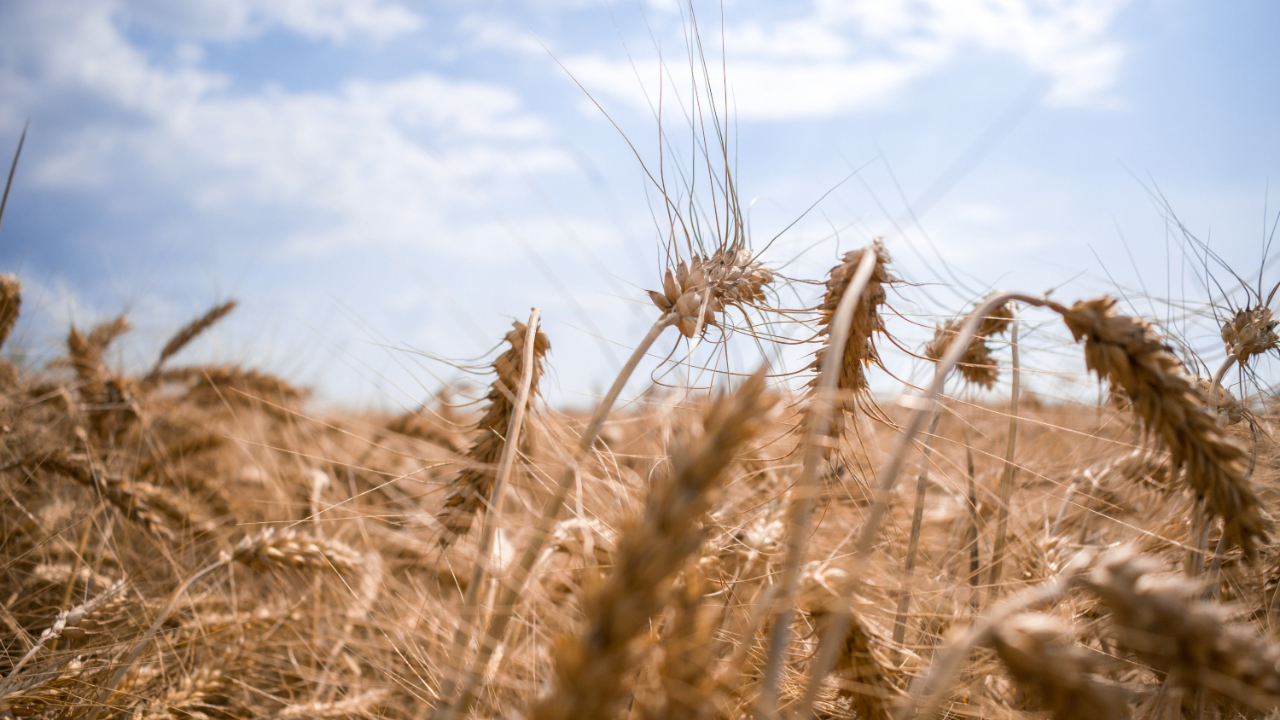
The final section presents two harvests. First, John sees “one like a son of man” seated on a cloud, with a golden crown and a sharp sickle (Revelation 14:14).
That title, “Son of Man,” takes us back to Daniel 7:13–14, where one like a son of man comes with the clouds of heaven and is given dominion, glory, and a kingdom that will never pass away. Jesus used this title for Himself throughout the Gospels.
Here, He’s the one overseeing the harvest.
The earth is reaped. This likely represents a gathering of the righteous, a moment of redemption and rescue. It reminds us of passages like Joel 3:13, where the harvest is ripe.
Then comes a second harvest, more severe. Another angel gathers the grapes of the earth and throws them into “the great winepress of the wrath of God” (Revelation 14:19).
This imagery comes from Isaiah 63:1–6, where the Lord is pictured as treading the winepress in judgment. It’s vivid and intense because it reflects the seriousness of sin and the certainty of justice.
I believe this points ahead to the judgments associated with the end of the Tribulation, leading into Christ’s return and the establishment of His kingdom.
The key takeaway is this: a harvest is coming. Every life will be accounted for. Every decision will matter.
What This Means for Us Today
It’s easy to read a passage like this and feel far away from the things it's describing, but the application is very present.
First, this passage reminds us that Jesus is victorious. No matter how chaotic the world seems, the Lamb is standing on Mount Zion. His victory is certain. You don’t need to live in fear. You can live with confidence.
Second, it calls us to faithfulness. The 144,000 followed the Lamb wherever He went. That’s a simple but powerful description of the Christian life. Follow Jesus. Stay close to Him. Don’t compromise.
Third, it urges us to respond to the gospel. The eternal gospel is still being proclaimed. The call to fear God, give Him glory, and worship Him is just as relevant now as it will be then.
Fourth, it reminds us that judgment is real. That isn't a popular message, but it’s a true one. And it makes the grace of Jesus all the more meaningful. He took the wrath we deserved so we could receive the life we don’t deserve.
Think about that. The winepress of God’s wrath is real. But Jesus stepped into that place for us. On the cross, He bore our sin. He absorbed the judgment. He made a way for us to be forgiven and restored.
Isaiah 53:5 says, “He was pierced for our transgressions… and with his wounds we are healed.” That’s the heart of the gospel.
Finally, this passage gives us hope. The harvest is coming, and for those who belong to Jesus, it’s a harvest of redemption, not destruction.
So keep pressing forward. Remain faithful. Trust and follow Jesus.
He isn’t losing. He isn’t late. And He isn’t uncertain about how this story ends.
We will see Him standing on Mount Zion. And everyone who belongs to Him will be there too.
© John Stange, 2026